Chemotherapy in rectal cancer: regimens, side effects and duration
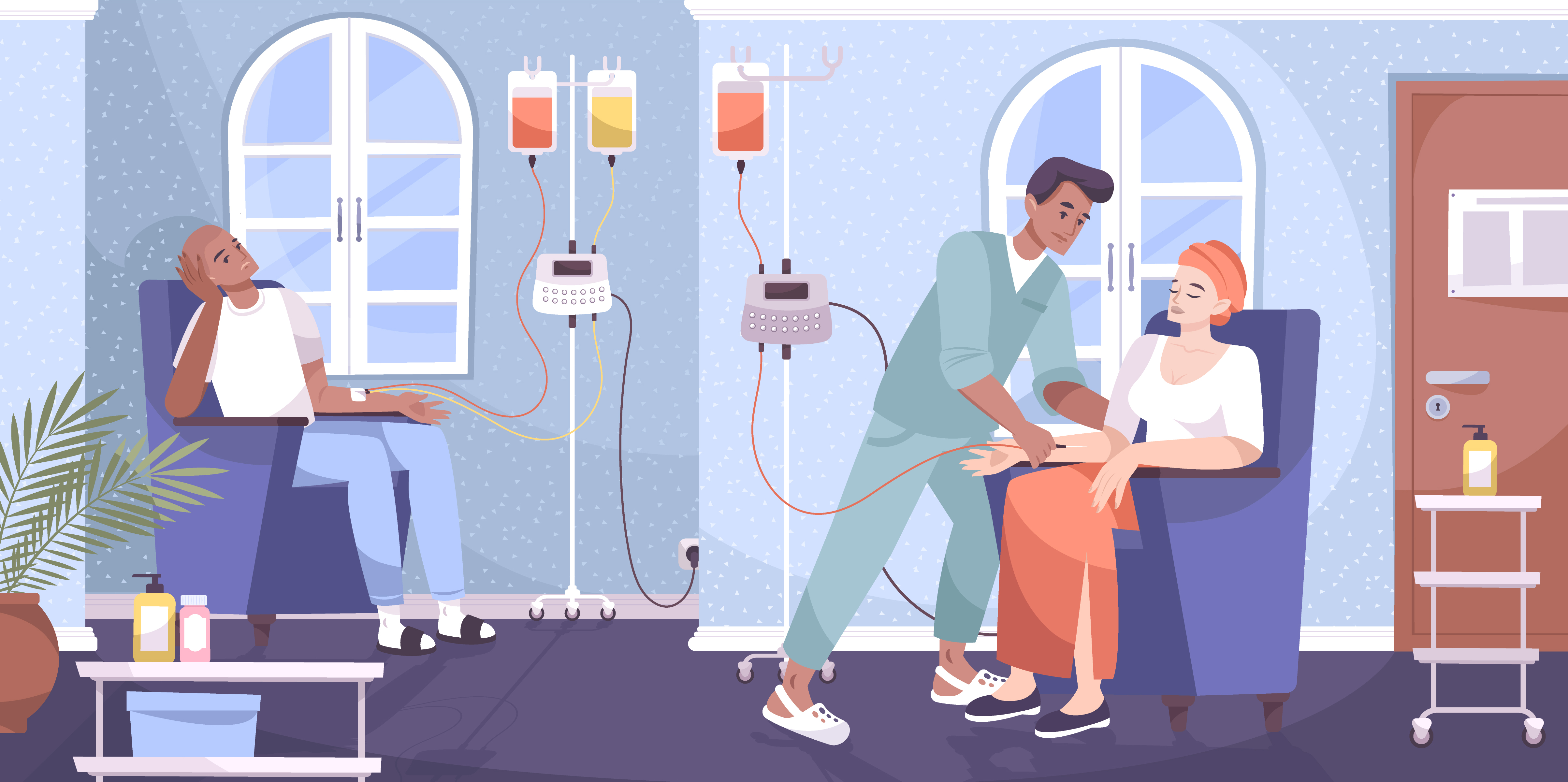
Chemotherapy is an important component of rectal cancer treatment, especially in stages II and III. It can be given before surgery (neoadjuvant), after surgery (adjuvant), or at both points. This article explains the regimens used, what side effects to expect and how to manage them.
When chemotherapy is used
Neoadjuvant chemotherapy (before surgery)
- Concurrent with radiotherapy — daily oral capecitabine during radiotherapy
- Total Neoadjuvant Therapy (TNT) — 3-4 months of FOLFOX/CAPOX plus chemoradiotherapy, all before surgery
- Goal: shrinking the tumor, increasing the chance of complete response, early treatment of micrometastases
Adjuvant chemotherapy (after surgery)
- Given to patients with stage III and some patients with stage II with risk factors
- Duration: 3-6 months (depends on response to neoadjuvant treatment)
- Goal: eliminating remaining microscopic cancer cells and reducing the risk of recurrence
Palliative chemotherapy (stage IV)
- For patients with metastases that cannot be completely resected
- May be given for an indefinite period, with breaks
- Goal: disease control, prolonging survival and maintaining quality of life
Chemotherapy regimens
FOLFOX
- Components: 5-Fluorouracil (5-FU) + Leucovorin + Oxaliplatin
- Administration: intravenous infusion every 2 weeks
- Cycle duration: 2 days (a portable pump is worn at home for the 46-hour continuous infusion)
- Number of cycles: 6-12 cycles (3-6 months)
- Port-a-cath: a subcutaneous device is implanted for easy venous access
CAPOX (XELOX)
- Components: Capecitabine (oral) + Oxaliplatin (infusion)
- Administration: Oxaliplatin infusion every 3 weeks + daily Capecitabine tablets, 14 days out of 21
- Cycle duration: 3 weeks
- Number of cycles: 4-8 cycles (3-6 months)
- Advantage: fewer hospital visits (every 3 weeks instead of 2)
Capecitabine alone
- Administration: oral tablets, daily, 14 days out of 21
- Used: concurrent with radiotherapy or as an alternative to FOLFOX/CAPOX in patients who do not tolerate oxaliplatin
Side effects and their management
Common side effects
Fatigue
- The most common effect — affects 70-80% of patients
- Worsens through the cycles
- Management: moderate physical activity (30 minutes of walking daily), regular sleep, accepting the need to rest
Nausea and vomiting
- Usually controllable with antiemetic medication
- Management: preventive medication (ondansetron, dexamethasone) given before chemotherapy; small, frequent meals; avoid strong odors
Peripheral neuropathy (from oxaliplatin)
- Numbness, tingling in fingers and toes
- Cold sensitivity — do not touch cold objects, do not drink cold liquids in the first days after infusion
- Management: warm gloves and socks; avoid cold; report symptoms to your doctor — the dose may be reduced or oxaliplatin stopped
Diarrhea
- More common with capecitabine
- Management: loperamide (Imodium), abundant hydration; if more than 4-6 stools per day, contact your doctor
Hand-foot syndrome (from capecitabine)
- Redness, swelling, pain and peeling skin on palms and soles
- Management: moisturizing creams, avoid hot water, excessive heat and pressure on hands/feet
Effects on blood
- Decreased white blood cells (neutropenia) — increases the risk of infections; avoid contact with sick people
- Anemia — fatigue, pallor; may require transfusions or erythropoietin
- Decreased platelets — bleeding risk; watch for unexplained bruises
Blood tests are done before each cycle to check whether your body is ready for the next dose.
Life during chemotherapy
Work
- Many patients continue to work, possibly part-time
- Schedule chemotherapy days at the end of the week if possible
- Days 2-4 after infusion are usually the most difficult
Diet
- Eat what you enjoy and what you tolerate
- Protein is important for recovery (meat, fish, eggs, dairy)
- Plenty of fluids — at least 2 liters per day
- Avoid alcohol on chemotherapy days
Physical activity
- Moderate physical activity is recommended during chemotherapy
- Reduces fatigue, improves mood and may improve treatment tolerance
- 30 minutes of daily walking is a reasonable goal
Fertility
- Chemotherapy may affect fertility, temporarily or permanently
- If you wish to have children in the future, discuss with your doctor about egg or sperm preservation before starting treatment
When to contact your doctor urgently
Call the hospital immediately if you have:
- Fever above 38°C (100.4°F) — may indicate infection on top of neutropenia
- Severe diarrhea — more than 6 watery stools per day
- Bleeding that does not stop
- Nausea/vomiting that does not respond to antiemetic medication
- Chest pain or difficulty breathing
- Allergic reactions during infusion (rash, difficulty breathing)
How many cycles are needed
The number of cycles depends on several factors:
- Neoadjuvant (TNT): 4-8 cycles of FOLFOX/CAPOX
- Adjuvant after surgery: 4-8 cycles, completing up to 6 months of total treatment
- Palliative: continued as long as the disease responds and the patient tolerates treatment
Duration may be adjusted based on treatment response and individual tolerance.
This article is for informational purposes only and does not replace medical consultation. Discuss with your oncologist about the chemotherapy regimen appropriate for you.